


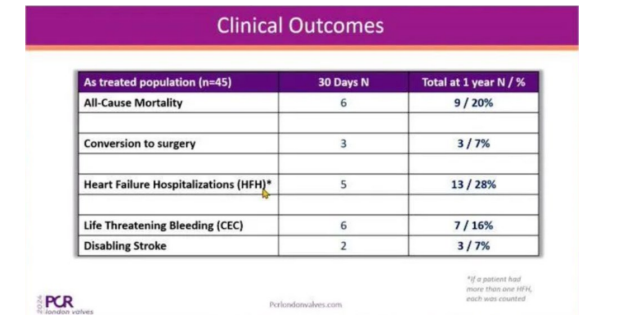
According to the clinical results, HighLife® achieved atechnical success rate of 89%. At 1 year, the all-causemortality rate was 20% (N=9), the heart failure hospitalizationrate was 28% (N=13), with 3 cases transitioning to surgery, 7cases of life-threatening bleeding, and 3 cases of stroke. Allpatients showed significant improvement in mitralregurgitation (MR) at 1 year, with MR≤1+, an average mitralvalve transvalvular pressure gradient of 5.1mmHg, no valverelated thrombotic events, no left ventricular outflow tract(LVOT) obstruction, 1 case of residual paravalvular leak(PVL>1+) occurred, no PVL closure, and no hemolytic events.
Over 80% of patients maintained NYHA I/II functional class at 1 year, with the KCCQ scoreincreasing from 49.4 to 66.0. The study results indicate that for patients at high risk for surgicalprocedures with moderate to severe MR, HighLife® is a safe and effective technology,achieving excellent technical success at 1-year follow-up. The results demonstrate sustainedclinical benefits of eliminated regurgitation, and meet the primary safety and efficacy endpoints.